9 min read
Restaurant website design in India: what a restaurant or cloud kitchen needs to take orders without Zomato
Restaurant website design in India for direct orders: menu, photos, Google profile, WhatsApp and online ordering, real aggregator commission figures and costs.
In a recent r/Zomato thread, a Mangalore restaurant owner laid out the maths on a ₹100 dish: "the platform charges us approximately 43% in commissions and related charges, based on my experience." After ₹35 of ingredients, ₹22 was left for rent, staff and everything else.
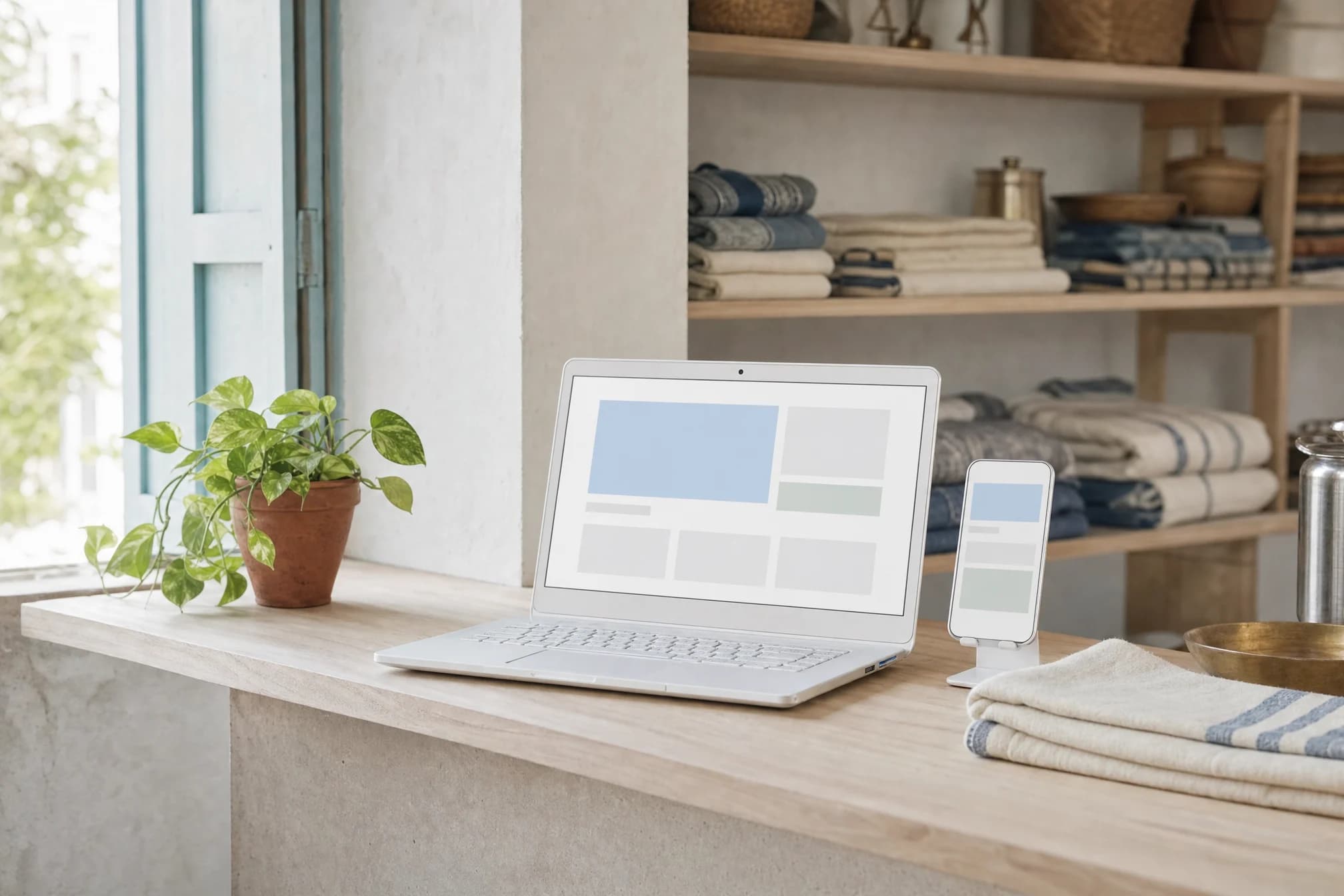
That is why owners search for restaurant website design in India. The honest answer: a good restaurant website does not replace Zomato and Swiggy. It sits next to them and turns your repeat customers into direct orders. For most small restaurants and cloud kitchens that means a fast menu site, a strong Google Business Profile and WhatsApp ordering, which costs roughly ₹15,000 to ₹40,000 to set up (our estimate). Full online ordering with payments and delivery costs more, and only pays off once you have regulars.
What Zomato and Swiggy really cost a restaurant#
| Source | What they reported |
|---|---|
| BNP Paribas, quoted by The Economic Times, July 2025 | Commission of 18% to 25% per order on Zomato and Swiggy |
| A Whitefield cafe partner, The News Minute, August 2026 | Commission of 20% to 30% per order, plus in-app ads and banners |
| NRAI's Bengaluru head, same report | Effective burden of 40% to 60% once discount contributions are included |
| Mangalore owner on Reddit, October 2026 | About 43% in commissions and related charges |
Treat these as ranges, not a rate card. Your figure depends on your city, your contract, whether you run discounts and how much you spend on in-app ads. Restaurant bodies in Bengaluru also complain about commission being charged on GST, long-distance fees and campaigns switched on without consent. In August 2026 they threatened a boycott, and Swiggy and Zomato agreed to seek consent before running discount campaigns, according to a Financial Express report.
Be fair to the apps too. A reply in the same Mangalore thread made the other side of the argument: "If a small business sells 50 items a day then because of delivery apps they sell >500 a day." The apps bring new customers, riders and trust. Your own site brings back the customers who already know you. You want both.
What a restaurant website needs#
Here is what actually earns orders, in order of impact.
1. A menu written as text, not a PDF#
Real text with categories, prices, veg and non-veg marks, and portion sizes. It loads fast on a cheap phone, Google can read it, and you can change a price in a minute.
2. Real photos of your food#
Shoot your top ten dishes in daylight on a plain surface. Stock photos of someone else's biryani cost you trust.
3. Timings, area served and one-tap contact#
Opening hours, the delivery radius or pin codes you cover, a call button, a WhatsApp button and a map, all on the first screen on mobile. Add your FSSAI licence number in the footer. Customers who have never eaten your food look for signs you are real.
4. A Google Business Profile that matches the site#
Many customers meet your restaurant on Google Maps before they ever see your home page. Same name, address, phone and hours everywhere, a link to your menu page, and fresh photos. Our Google Business Profile setup guide covers it step by step, and how to get more Google reviews covers the reviews.
5. A way to order directly#
This is the part that saves commission. There are three levels, covered next.
How to take orders without Zomato#
Level 1: WhatsApp ordering#
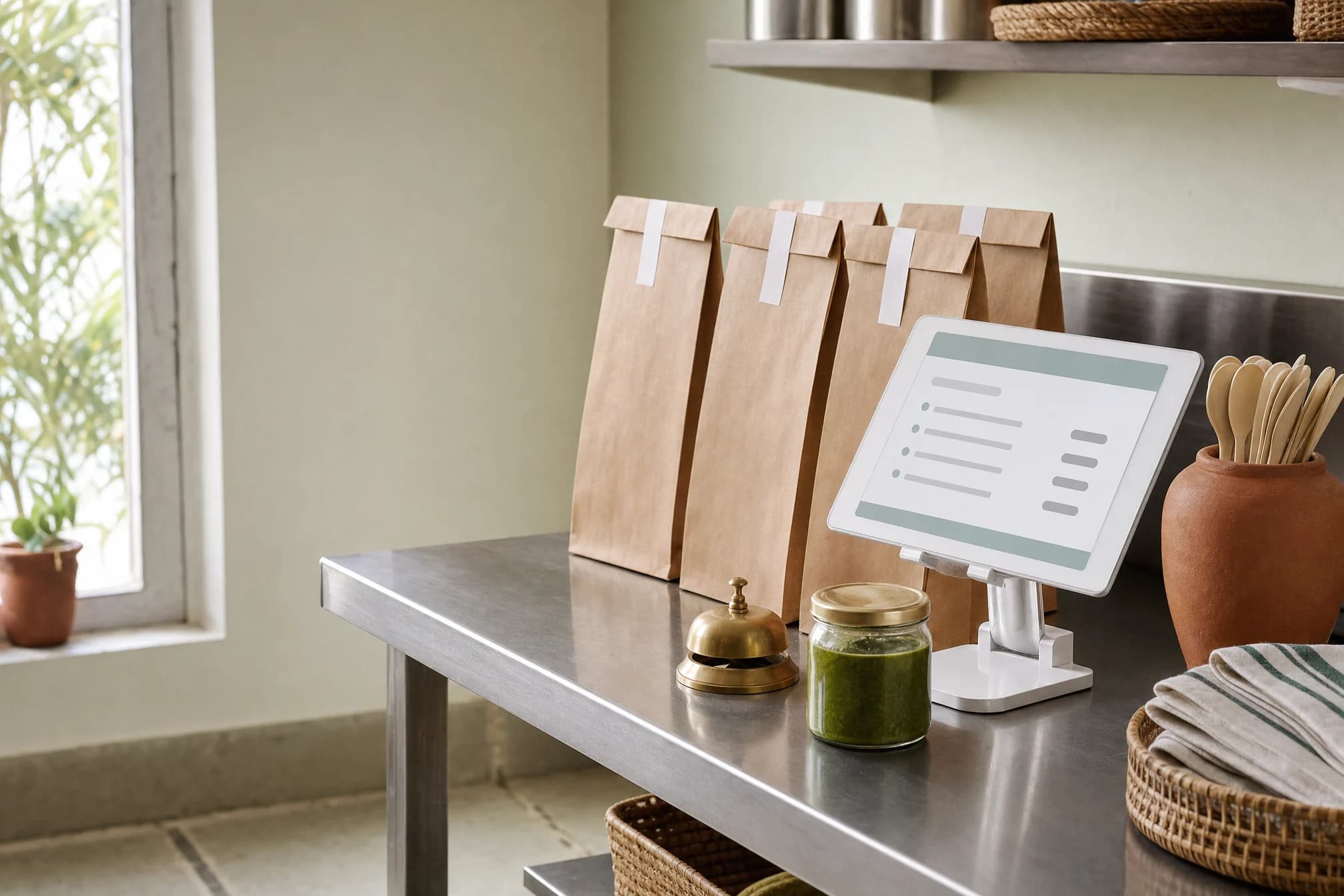
The WhatsApp Business app is free. Add your menu as a catalogue, put a "Order on WhatsApp" button on the site, and take UPI payment. It works well up to a few dozen direct orders a day. Beyond that, one person typing replies becomes the bottleneck, and a WhatsApp bot or the API starts to make sense. Our guide to the WhatsApp chatbot for business has the 2026 costs.
Level 2: An ordering tool on your own domain#
Indian restaurant software now bundles a menu page, cart, UPI and order screen. Prices vary widely; one tool we checked, OrderIt, lists plans from ₹200 to ₹500 a month. Check whether you get your own domain, who owns the customer list, and whether it prints KOTs (kitchen order tickets) in your kitchen.
Level 3: A custom restaurant online ordering website#
A cart, checkout, payment gateway, delivery booking and a customer database built for you. Payment gateways in India charge about 2% plus 18% GST per payment; our payment gateway comparison has current rates. Go here when you have steady repeat orders, several outlets or brands, or a loyalty plan. If you are thinking about a full app with riders and many restaurants, that is a different project; see what it costs to build an app like Swiggy or Zomato.
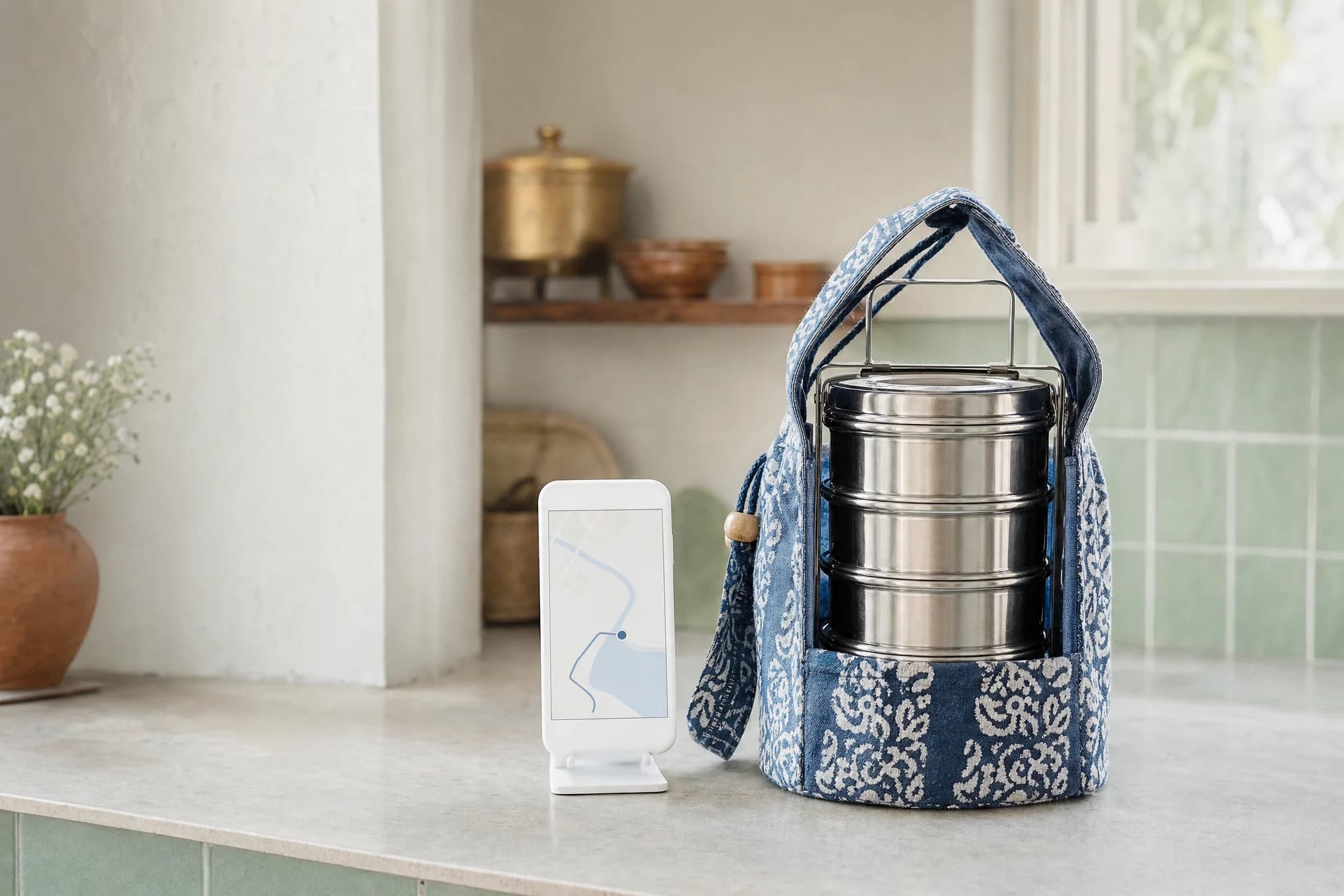
Delivery: who carries the food#
Direct ordering only works if the food arrives hot. Your options in 2026:
- Your own riders. Best control, but a fixed salary. Makes sense once you have steady volume within 3 to 4 km.
- Porter. Two-wheeler delivery runs in many cities. In Lucknow, Porter's page lists two-wheelers starting from ₹48, including the first kilometre, with pricing varying by locality.
- Shadowfax. Offers hyperlocal delivery for food and other goods, and a courier app for on-demand pick-up and drop within the city for small businesses.
- Dunzo is gone. Many older guides still recommend it. Its app and website stopped working in early 2025.
Customers know the risk here. In an r/hyderabad thread about ordering straight from cloud kitchens, one reply put it bluntly: "What you get from Swiggy is not food. It's the confidence that a neutral player will be the arbitrator" when something goes wrong. So publish a simple refund rule, answer WhatsApp complaints fast, and share tracking links.
ONDC and the newer apps#
ONDC (Open Network for Digital Commerce) is the government-backed network. A restaurant joins through a seller app and then appears on buyer apps such as Magicpin and Paytm. BNP Paribas put its commission at 10% to 11%, about half the big apps. The catch: ONDC's food orders slowed once its customer subsidies were cut, and analysts blamed weak last-mile delivery. It is still live and worth listing on, as an extra channel, not a replacement.
Ownly, Rapido's food app, charges restaurants zero commission and bills customers for delivery instead. It launched in Bengaluru in March 2026 and reached Hyderabad in September, with plans for all metros. If you are in one of its cities, list there too.
A worked example: a Lucknow kebab cloud kitchen#
Take a hypothetical cloud kitchen in Gomti Nagar selling galouti, seekh and kakori kebabs with sheermal. It gets 40 orders a day on the apps at an average of ₹450.
At a 25% commission plus 18% GST on that commission, each order costs about ₹133 before ads or discounts. That is around ₹1.6 lakh a month.
Now suppose 10 of those daily orders move to direct ordering on WhatsApp and the website. The gateway costs about ₹11 per order. If the customer pays delivery, the kitchen keeps about ₹120 more per order, roughly ₹36,000 a month. If the kitchen absorbs a Porter fare of, say, ₹60 to ₹90 for a 3 to 5 km trip (our estimate), it still keeps ₹30 to ₹60 more per order.
Moving 10 orders a day is realistic only for a kitchen with regulars. A new kitchen should find customers on the apps first.
What a restaurant website costs in India#
Our estimates for 2026. Dollar figures at about ₹88 to $1.
| Option | One-time | Monthly | Good for |
|---|---|---|---|
| Google profile and WhatsApp Business app | ₹0 | ₹0 | Day one, every restaurant |
| Menu website with photos, timings and WhatsApp button | ₹15,000 to ₹40,000 ($170 to $450) | ₹300 to ₹700 for domain and hosting | Most restaurants and cloud kitchens |
| Ordering tool on your domain | ₹0 to ₹10,000 setup | A few hundred to a few thousand rupees, plus gateway fees | 10 to 50 direct orders a day |
| Custom ordering website | ₹75,000 to ₹2.5 lakh ($850 to $2,850) | ₹3,000 to ₹10,000 upkeep, plus gateway and delivery | Multi-outlet brands, loyalty, own riders |
| Food photo shoot | ₹10,000 to ₹30,000 | Anyone using stock photos today |
For reference, our Starter Sprint starts at ₹24,999 ($499) and Launch System at ₹74,999+ ($1,499+); see pricing. Upkeep matters as much as the build; our guide to website maintenance cost in India covers it. Running a coaching centre instead? See our coaching institute website guide.
Common questions#
How much commission does Zomato charge restaurants?#
Reported figures run from 18% to 30% per order, depending on city and contract. Once discounts, ads and other deductions are added, restaurant bodies say the effective cost can reach 40% to 60%.
How do I take orders without Zomato?#
Start with a free WhatsApp Business catalogue and a simple menu website linked from your Google Business Profile, and deliver with your own rider or Porter.
Does a restaurant need a website if it is on Swiggy?#
Yes. The apps own the customer relationship. Your site and Google profile are where regulars find your direct number, your lower prices and your timings.
What is the restaurant website cost in India?#
About ₹15,000 to ₹40,000 for a menu site with WhatsApp ordering, and ₹75,000 to ₹2.5 lakh for a custom ordering website with payments (our estimates).
The short version#
Keep Zomato and Swiggy for new customers, and use your own website for the ones who come back. Most restaurants should start with a text menu, real photos, a matching Google profile and WhatsApp ordering. Add a proper ordering system only when direct orders justify it. Plan delivery before you promote direct orders, and list on ONDC or Ownly as extra channels if they run in your city.
Want to work out how many direct orders would pay for a site for your kitchen? Book a free strategy call and we will run the numbers with you.